
The Green New Deal has given politicians on both sides of the aisle a chance to directly address climate change…

The Green New Deal has given politicians on both sides of the aisle a chance to directly address climate change…


Call for submissions open for a second year as AIR fosters innovation by supporting research-led artists to combat climate change
Los Angeles, CA – Los Angeles Cleantech Incubator (LACI) today launched the second year of its Artist-in-Residence Program (AIR) by opening its application process for a new cohort of diverse artists. LACI is hosting a panel today with 2018 resident artists—Rebecca Bruno, Nova, Jiang, and Program Founder Debra Scacco— who will discuss how the residency impacted their art practice through exposure to the intellectual and mechanical resources housed at LACI.
AIR is a pioneering program at the intersection of art and the environmental sector. The first of its kind at the LA Kretz Innovation Campus, AIR is made possible through generous support from the Durfee Foundation, a family foundation investing in extraordinary people and programs to improve the lives of those living in Los Angeles, and many others. The program continues to engage donors to meet its funding needs for the coming year.
AIR is designed to uniquely function within a clean technology incubator. Through a stipend, training and access to tools, and the opportunity to collaborate with members of LACI’s intellectual network, three artists are supported in the process of research, learning, and developing long-term ideas related to climate change. For research-based interdisciplinary artists, this is ideal. They have the opportunity to forge relationships with entrepreneurs, policy makers and leading thinkers while also having access to the Advanced Prototyping Center (APC). The APC provides artists with tools including a laser cutter, water jet, metal shop and more.
“We are so excited about AIR and the work of our second cohort of incredible artists–we are endeavoring to empower innovation by uniting the creative and cleantech communities to address environmental problems. Curiosity unites our artists and entrepreneurs to partner together to find breakthrough solutions to climate change,” said Matt Petersen, LACI’s CEO. “Complex issues cannot be approached from one perspective, and being a nexus of different mediums for problem-solving is core to LACI’s DNA.” Matt Petersen, President & CEO, LACI.
Today’s panel discussion will share how first year residents discussed innovative approaches to climate change. Through varying ways of working, each artist engaged with a deep study of humans in relation to their surrounding environments, highlighting agricultural regeneration, urban erasure, and city infrastructure.
“Artists are faced with multiple professional challenges: financial insecurity, being continually overstretched and limited access to resources being among the most common. I created AIR specifically to address these challenges. The program provides space for critical thinking, interdisciplinary dialogue and conceptual and material experimentation. We encourage artists to think, learn, and play; and facilitate opportunities to build relationships with leading minds in the environmental sector. My hope is in the not-so-distant future we start seeing public works about climate change appear throughout LA and beyond as a result of the support and introductions made during AIR.“ Debra Scacco, Founding Director of LACI’s AIR Program.
AIR is committed to reflecting the diversity of multi-cultural Los Angeles, and to enhancing opportunities of creative thinkers across the city. In addition to the residency itself, AIR hosts year-round creative programming. 2018 included artists’ studio visits for South LA teens, an artists’ talk featuring Carolina Caycedo, a site visit to a recycling facility and a range of professional development workshops with community partner Small Green Door. AIR’s free on-and-off campus programming benefits a diverse array of creative thinkers concerned with climate-related issues.
About AIR
AIR, the Artist-in-Residence Program at Los Angeles Cleantech Incubator (LACI), empowers innovation by uniting the creative and cleantech communities in the shared aim of addressing global environmental problems.
Situated in the heart of Los Angeles’ Arts District, AIR enhances LACI’s innovation community by introducing research-led artists to a thriving environment: where entrepreneurs, engineers, organizations and policy makers collaborate, promote and support the development of clean technologies.
The benefits of the six-month residency include:
— $13,000 stipend
— Access to leading minds
— Training and access to prototyping equipment
— Community engagement at the interplay of technology, sustainability, and the arts
Artists in the program receive training and access to the Advanced Prototyping Center at the La Kretz Innovation Campus, owned by LADWP and managed by LACI. The Advanced Prototyping Center features an electronics lab, bio-chemistry lab, CNC center, water jet center, welding shop, 3D printing shop, use of premium CAD software, laser cutters, sand- blasting, large scale printing, an industrial sew shop and more.
In addition to the Residency Program, AIR offers free public programming focused on equity, collaboration, community building and empowering artists as agents of change.
AIR is now accepting applications for three new resident artists, with the six-month residency to begin May/June.
To Apply: https://laincubator.org/air2019call/
Eligibility: Professional Los Angeles based artists from all backgrounds and of all disciplines are encouraged to apply.
For more information visit: https://laincubator.org/air/
About LACI
The Los Angeles Cleantech Incubator (LACI) is a private nonprofit organization creating an inclusive green economy by unlocking innovation (through working with startups to accelerate the commercialization of clean technologies), transforming markets (through partnerships in transportation, energy and sustainable cities) and enhancing communities (through workforce development, pilots and other programs). Founded as an economic development initiative by the City of Los Angeles and its Department of Water & Power (LADWP), LACI is recognized as one of the most innovative business incubators in the world by UBI. In the past six years, LACI has helped 73 portfolio companies raise $184M in funding, $220M in revenue, create 1,700 jobs, and deliver more than $379M in long term economic value. Learn more at laci.org.
For more information, please visit https://laci.org and follow us on Twitter and Facebook @LACIncubator.
Media Contact
Claire Totten
Mercury for Los Angeles Cleantech Incubator
Cell: (805) 901-0447
Ctotten@mercuryllc.com
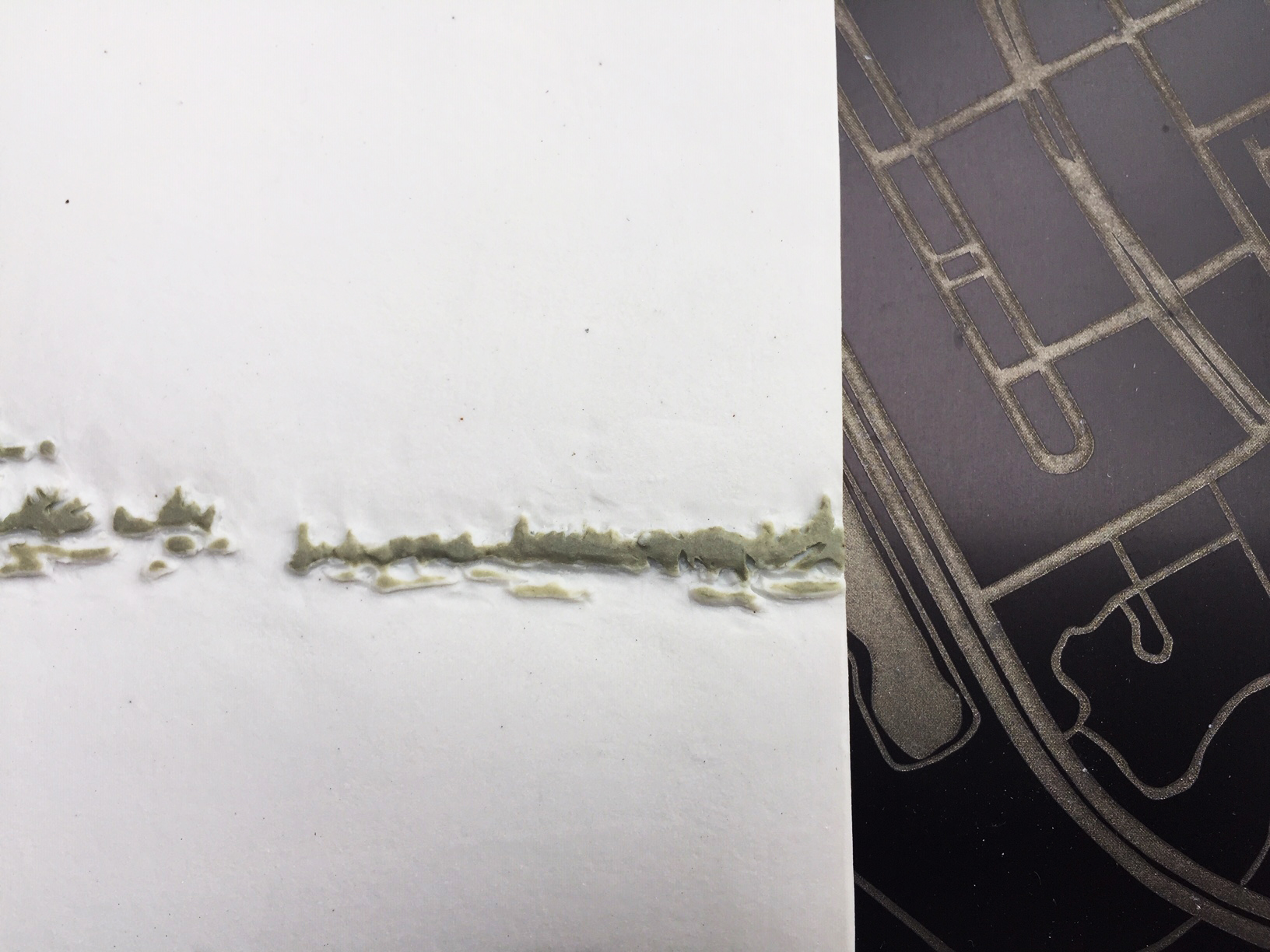

Enjoy selected findings by Beatriz Jaramillo, Elana Mann and Brittany Ransom created while artists-in-residence at Los Angeles Cleantech Incubator (LACI).
(Dis)Location
January 23 – February 2, 2020
Royale Projects
432 Alameda Street
Los Angeles, CA 90013 (Entrance on Seaton between 4th & 5th)
Open Thursday – Sunday, 12PM – 5PM
Opening Reception
Thursday, January 23, 2020
5PM – 8PM
Panel Discussion
Sunday, Jan 26, 2020
3PM – 5PM
Contact
AIR@laci.org
—
(Dis)Location presents selected findings by Beatriz Jaramillo, Elana Mann and Brittany Ransom created while artists-in-residence at Los Angeles Cleantech Incubator (LACI). Through diverse media and approaches, each artist engages in a deep study of place, highlighting the loss of Los Angeles wetlands, one path towards mitigating toxic manufacturing, and tree-destroying beetles that substantially contribute to the spread of wild fires. A bridge between land and water, wetlands are among the most productive ecosystems in the world. Their sponge-like ability to absorb and release water creates a natural filtration system, and protects against extreme weather events. However, in order to filter water and mitigate damaging climate events, wetlands require space to breathe.
Early photographs of Los Angeles evidence thousands of acres of wetlands, with key areas stretching from mid-city to South LA, and the entirety of Marina Del Rey. Up to 95% of this natural habitat is now lost to urban development; and with this, we lose the potential to capture blue carbon, house diverse ecosystems, and recharge underground aquifers. In In Between: Los Angeles Wetlands, Beatriz Jaramillo explores the contradiction between continual urban expansion and nurturing this vital natural resource. Through research at Ballona Wetlands, Jaramillo has created a series of works in engraved aluminum and porcelain juxtaposing the serenity of the wetlands with hard edge representations of the urban infrastructure that contribute to their demise. With each wetlands area positioned within 5% of the frame, the work establishes a picture of just how much we have lost.
Elana Mann’s Dark Victory discusses the life cycle of petroleum-based black pigment, found in everything from tires to water bottles; and a possible solution in LACI portfolio company Nature Coatings. Originally presented at CicLAvia: Heart of LA Celebrating UCLA 100, the work is a collaboration with Nature Coatings, a company who transform wood waste into high performing black pigment. Mann worked with Nature Coatings to create paint from their non-toxic pigment; and invited CicLAvia guests to make prints using this paint and the bicycle as a mobile printing press. In (Dis)Location, Mann presents documentation of this public engagement about the lineage and impact of everyday products, and ways we can improve our own carbon footprint.
Another unlikely Southern California dislocator is a tiny pest you have likely never seen. One of the most destructive wildfire seasons in California history (2018) was due in large part to swarms of silent architects no bigger than a grain of rice. Referred to by a Columbia University study as “one of the world’s most aggressive tree-killing insects,” bark beetles thrive in drought. They burrow in bark, building armies by laying eggs throughout the tree’s living tissue. While healthy trees create a resin that drowns paths and pushes the beetles out, drought-stricken trees have no capacity to do so. As the tress hollow, they become kindling for the spread of devastating wildfires. Bark beetles have killed more than 27 million trees in the greater Los Angeles area alone. As the beetles eat their way through trees, they leave behind perfectly preserved lines that resemble complex city systems. These lines are the subject of Parallel Pathways, a series of works by Brittany Ransom that study the immense impact bark beetles have on the future landscape of California. Pointing to specific places of flow, obstruction, and planned versus haphazard pathways, the bark beetle’s paths are recreated in reference to our own human building patterns and possible self destruction.
—
Also on view at Royale Projects:
Joel Otterson: Among Others
Jen Aitken: 3, 4½, 7½, 12
—
With special thanks to Royale Projects for their ongoing support of AIR.


 Solstice Energy Solutions takes the top prize, while Wheeli and EVmatch win technology categories in the first-ever California Climate Cup, the global competition showcasing the most promising and innovative megacity climate solutions. CalCEF Managing Director, Danny Kennedy (left) and LACI CEO Matt Petersen (right) present Ugwem Eneyo of Solstice Energy Solutions (center) the Grand Prize Check for the California Climate Cup on the Main Stage at The Global Climate Action Summit. Photo Credit: Mike Swords
LOS ANGELES, CA – On September 14, The Los Angeles Cleantech Incubator (LACI) and California Clean Energy Fund announced the winner of the California Climate Cup on the Main Stage of the Global Climate Action Summit in San Francisco, CA. The California Climate Cup is a startup competition seeking the world’s most promising climate solutions for megacities and region.
Ten competitors made it to the California Climate Cup finals held on September 10th from the US, Australia and France, and pitched their companies before a panel of judges representing Itron Idea Labs, Edison International, BMW i Ventures, Emerson Elemental, GreenBiz and Innovate UK. The top ten finalists were selected from over 100 applications in the areas of zero emissions mobility and goods movement, energy/transportation nexus, and digital solutions for sustainable cities.
Find out more information about the 10 California Climate Cup Finalists here.
Following the finals in Los Angeles, the three category winners, Wheeli, EVmatch and Solstice Energy Solutions, attended several events in San Francisco pitching in front of key customers, investors, global leaders and policymakers, culminating the Grand Prize presentation at the Moscone Center on Friday, September 14th.
Solstice Energy Solutions was awarded $25,000US and the two category finalists were awarded $5,000US.
“The California Climate Cup demonstrated that there is no lack of innovative, motivated minds tackling the climate crisis. These companies will enable a future with cleaner air for our cities and citizens, access to renewable energy and zero emission mobility, and reduce carbon emissions on a significant scale,” said Matt Petersen, President and CEO of the Los Angeles Cleantech Incubator. “Business innovation along with strong climate policy will help cities, states, and countries across the globe achieve the goals set with the Paris Agreement and Global Climate Action Summit. Congratulations to the finalists and winners and we look forward to seeing their continued success.”
The competition was supported by major sponsors Edison International and Itron Idea Labs. Additional sponsorship was offered by PG&E and LADWP and affiliate partner support was provided by C40 and GreenBiz / VERGE.
Meet the California Climate Cup Winners
Grand Prize and Winner of the Digital Solutions for Sustainable Cities Category, Sponsored by Itron Idea Labs – Solstice Energy Solutions
Solstice Energy Solutions emerged as the first event California Climate Cup grand prize winner. The San Francisco-based company develops IoT and software to intelligently manage distributed energy resources. Its initial focus is on cities in emerging markets where unreliable grids have resulted in distributed energy landscapes, primarily diesel generators. Increasing integration of distributed solar and battery technology ultimately requires intelligence, flexibility and control.
Zero Emissions Mobility and Goods Movement
Wheeli is a new York-based shared mobility company. Wheeli is the carpooling app for college students working to build a national transportation network starting with college campuses. Wheeli is the Airbnb for the empty car seats on the road.
Energy/Transportation Nexus Sponsored by Edison International
EVmatch from Santa Barbara, California provides people a network of electric vehicle charging stations. EVmatch is a peer-to-peer network for electric vehicle (EV) charging that harnesses the power of sharing to immediately create more reliable charging options. Through EVmatch, individuals and business owners rent out their private charging stations, earning money and supporting EV drivers with reservable charging. EV drivers leverage the sharing economy to easily find, reserve, and pay for charging with a few quick clicks using the company’s web or mobile applications.
About LACI
Los Angeles Cleantech Incubator (LACI) is a private non-profit organization helping to accelerate the commercialization of clean technologies and ensuring an inclusive green economy by unlocking innovation, transforming markets and enhancing community. Founded as a cluster-driven economic development initiative by the City of Los Angeles and its Department of Water & Power (LADWP), LACI is recognized as one of the most innovative business incubators in the world by UBI. In the past six years, LACI has helped 72 portfolio companies raise $159M in funding, $220M in revenue, create 1,695 jobs, and deliver more than $379M in long-term economic value.
LACI is an Equal Opportunity Employer (EOE) and committed to building a more inclusive ecosystem that integrates women, people of color, and other underrepresented groups into the cleantech sector and the overall tech industry. We strongly encourage applications from qualified applicants and members of underrepresented groups. The information collected from the application helps us ensure that we are meeting our goal of an equitable and diverse campus and community.
About California Clean Energy Fund
The California Clean Energy Fund (CalCEF) connects capital to catalytic clean energy investments and ideas. They work across the entire lifecycle of clean energy development, commercialization and deployment. Since 2004, California Clean Energy Fund has leveraged $1.5 billion in investment, invested in over 100 clean energy enterprises, and launched industry leading centers for solution collaboration. Today, they are planning for rapid clean energy adoption, to build equity into the energy economy and to create new jobs in California, the United States and around the world. California Clean Energy Fund operates offices in Oakland, CA and Shanghai, China. Learn more at calcef.org.
Media Contact:
Clare Le
213-358-6500
clare@laci.org


Photo Credit: Laura Rudich
LOS ANGELES – LACI welcomed the President of the Government of Spain and First Lady María Begoña Gómez Fernández on September 29th for a tour of the facility, and a discussion on the importance of climate action and Latino leadership.
Senate President pro Tempore Emeritus Kevin de León invited the President to LACI and the La Kretz Innovation Campus, which are in de León’s district area. LACI CEO Matt Petersen provided the President and First Lady a tour of the LKIC campus, including the Prototyping Center. Following the tour, Petersen welcomed the President and First Lady in front of a full audience to discuss climate action, and related issues facing society and how business, government, and entrepreneurs are leading the way.
“Very few places in the world are so ambitious as California in their attempts to face this issue,” said Prime Minister Sánchez in his prepared remarks on climate policy. “We are going to work together, because I am sure that together, civil society, business, and the public sector can make it happen.”
“It was an honor to host President Pedro Sánchez, and have the opportunity to share LACI’s work with entrepreneurs, government leaders, and corporate partners to create a green, inclusive economy for the Los Angeles region,” said Matt Petersen, CEO of LACI. “We are grateful to Senator De León for his climate leadership, support for our organization’s work, and inviting President Sánchez to the campus.”

Photo Credit: Laura Rudich
After speaking briefly to press, President Sánchez led a roundtable discussion about Latino leadership. Participants from Los Angeles included Senator de Leon, Rep. Jimmy Gomez (D-CA), State Assemblymember Wendy Carrillo (D-Los Angeles), State Assemblymember Miguel Santiago (D-Los Angeles), Vice Mayor of San Jose Magdalena Carrasco, Mr. David Ayon, Alejandro González Iñárritu, Dr. Cynthia Telles, Dr. Francisco Rodriguez, Mr. Walter Ulloa, and Mr. Moctesuma Esparza.

Partners Call for Additional 25 Percent Reduction in Greenhouse Gas Emissions Beyond Current Commitments Through Acceleration of Transportation Electrification in the L.A. Region by 2028
LOS ANGELES (Sept. 11, 2018) The unprecedented Transportation Electrification Partnership—convened by the Los Angeles Cleantech Incubator (LACI) —today released the 1.0 version of their Zero Emissions 2028 Roadmap, setting the goal to move toward an additional 25 percent reduction in greenhouse gas emissions and air pollution beyond current commitments—through accelerating transportation electrification—by the time the world arrives in Los Angeles for the 2028 Olympic and Paralympic Games.
The Partnership’s Leadership Group—comprised of the California Air Resources Board (CARB), Los Angeles Mayor Eric Garcetti, County of Los Angeles, Los Angeles County Metropolitan Transportation Authority (LA Metro), Los Angeles Department of Water and Power (LADWP), Southern California Edison (SCE), & LACI—have already made ambitious commitments to transportation electrification for the region that are aligned with California’s climate change and air quality goals, as well as the Paris Agreement’s 2 degrees Celsius goal. The additional 25 percent goal to reduce GHGs and air pollution reflects the Partnership’s ambitious commitment to help the region go further, faster together, including through the Roadmap’s principles and targets for key sectors.
With its release on the eve of California Governor Brown’s Global Climate Action Summit, the Roadmap’s targets include ensuring that 20 to 45 percent of all passenger cars are electric by 2028, and 10 to 40 percent of all heavy-duty drayage trucks on the road are zero emissions by 2028. LACI and the Partnership’s Leadership Group, Advisory Group, and other stakeholders will work together over the coming year to conduct further analyses in preparation for the release of the Roadmap 2.0 by Fall 2019.
“Climate change doesn’t respect any city lines or national borders, so our response to it requires strong partnerships, unified action, and the urgency demanded by the greatest threat to our planet’s health and our families’ futures,” said Mayor Garcetti. “This Zero Emissions Roadmap will help us set ambitious transportation targets in our Sustainable City pLAn, while strengthening L.A.’s economy, reinforcing our commitment to environmental justice, and accelerating the reduction of dangerous emissions between now and the 2028 Olympic and Paralympic Games.”
“Los Angeles County is proactively investing in zero-emissions transportation,” said Los Angeles County Supervisor Janice Hahn, whose district includes the Ports of Los Angeles and Long Beach. “Communities along our freeways and in the Harbor Area have shouldered the air pollution burden of our car culture and goods movement system for too long. We have the technology we need to kick our reliance on fossil fuel and drive a zero-emissions future—and with this roadmap we can get started building that future today.”
“Using the deadline of the Olympics in 2028, we can use the LA region’s can do attitude along with California’s leadership to make things possible that were never before,” said Mary D. Nichols, Chair of CARB. “That’s why this partnership is so powerful and critically important to reducing greenhouse gas emissions, cleaning up our air, and leading the transition to a zero-emissions future.”
The Roadmap also includes targets for the deployment of charging infrastructure, electric buses and medium-duty electric delivery trucks, among other targets. The Roadmap will be a key tool that other cities and regions outside Greater Los Angeles can use to inform their own efforts to move towards zero-emissions, working to combat climate change in the manner inspired by the Paris Climate Accord.
“As the White House rolls back air quality and fuel efficiency standards, the Partnership and Roadmap reaffirm that the L.A. region and California are leading the way to cleaner air and a brighter future,” said Matt Petersen, president and CEO of LACI. “Thanks to the landmark Transportation Electrification Partnership, the Zero Emissions 2028 Roadmap will help keep the Los Angeles region focused on our important 25% additional reduction goal while unlocking innovation through startups.”
As part of the Partnership and Roadmap implementation, LACI will begin to identify catalytic pilots, demonstration showcases and testbeds for transportation electrification and shared mobility, and also host technology competitions and incubate start-ups, while helping develop the needed workforce for bringing the benefits of transportation electrification to disadvantaged communities. For example, LACI and the California Clean Energy Fund recently announced finalists for the first-ever California Climate Cup, a global startup competition with over 100 entries focused on promoting the next generation of technologies that will help megacities—as well as states and regions—accelerate reduction of greenhouse gas emissions, improve air quality, and enhance resiliency in the face of climate change.
The Partnership’s Leadership and Advisory Groups are instrumental to achieving and fostering the necessary collaboration to realize the Roadmap’s ambitious goals. The Advisory Group is comprised of diverse partners including BMW Group, PCS Energy, Itron Idea Labs, Greenlots, South Coast Air Quality Management District, Tesla, Pacific Gas & Electric, BYD, Southern California IBEW-NECA, California State University, Northridge and the USC Schwarzenegger Institute for State and Global Policy.
“LADWP has made great strides in reducing greenhouse gas emissions and air pollution and we are making significant investments in supporting electrification because a cleaner and greener transportation system is key to continuing the progress we have made in the Los Angeles region, said LADWP General Manager David Wright. “We are excited to partner with other utilities, local, regional and state government and others in the Transportation Electrification Partnership.”
“Southern California Edison has been aggressively moving forward with a range of programs that will help to electrify transportation across many sectors,” said SCE President Ron Nichols. “These programs support California’s greenhouse gas and air pollution reduction goals to achieve cleaner air for our communities. SCE is pleased to be part of a regional Transportation Electrification Partnership that has come together to accelerate the L.A. Region’s role as a national leader in zero-emission vehicles by 2028.
“LA Metro has 105 electric buses on order and will deploy a fully electric bus fleet on the Orange Line by 2020 and the Silver Line soon thereafter,” said LA Metro CEO Phillip A. Washington. “Our goal is to convert the entire 2,200-plus Metro bus fleet to zero emission vehicles by 2030, and we will do everything possible to accelerate that date. We believe it’s important to lead in the effort to fight climate change and improve air quality in Southern California.”
“Transportation is a leading source of air pollution that causes negative public health outcomes in Southern California and drives global climate change,” added Stella Li, President of BYD Motors. “BYD’s North America operations, with nearly 900 employees in Los Angeles County alone, is working to tackle this problem head-on by providing a range of battery electric bus, truck, forklift and rail options that will help the region, state and nation meet its clean transportation goals. BYD is pleased to partner with LACI on this important Zero Emission Roadmap.”
“The BMW Group is excited to be part of the LACI Transportation Electrification Advisory Group helping to identify ways to reduce GHG emissions and air pollution by accelerating zero emission mobility,” said Lisa Errion Saums, Vice President Government and External Affairs Americas, BMW of LLC. “The targets elaborated in the ZEV roadmap are very ambitious and require a substantive investment in infrastructure, additional financial and non-monetary incentives and continuous customer education and outreach. In order to reach these ambitious objectives joint efforts from all stakeholders involved are needed. LACI is bringing together an unprecedented partnership of local government leaders, utilities, regulators, start-ups and carmakers to work collaboratively and achieve regional transportation electrification faster. The BMW Group is committed to help transform mobility in L.A. to meet air quality and climate goals.”
“Tesla’s mission is to accelerate the world’s transition to sustainable energy because climate change is real and happening right now,” shared Rohan Patel, Director of Policy and Business Development for Tesla. It’s why we recently announced our decision to enter the heavy-duty market and why all our vehicles are 100 percent electric and zero-emissions. As both a California-based manufacturer and a provider of charging infrastructure with 20,000 employees throughout the state, we’re pleased to be part of the LACI Advisory group that is helping to shape and meet these goals.”
“The electrification of transportation is one of the biggest steps we can take to reduce carbon emissions and improve regional air quality,” Roberto Aiello, Director at Itron Idea Labs said. “We are proud to join this innovative group of stakeholders to create new opportunities for clean energy that can be readily adopted by cities around the world.”
“Although we operate in 13 countries across 3 continents, Greenlots is proud to call Los Angeles our home,” said Brett Hauser, CEO of Greenlots. “We share the city’s vision for a carbon-free future and believe that widespread and equitable access to electric vehicle charging infrastructure is key to achieving that vision. By embracing an ambitious sustainability agenda, Los Angeles is setting the standard for other large cities around the world. Greenlots is proud to work alongside LACI and other organizations to help the city shine ahead of the 2028 Olympic Games.”
Jennifer Kropke, Director of Workforce and Environmental Engagement for Southern California IBEW-NECA added, “The International Brotherhood of Electrical Workers, Local Union 11 and National Electrical Contractors Association Los Angeles Chapter are so proud to partner with LACI under the vision of Matt Petersen to usher in a new era of transportation electrification. The fruit of these efforts will be better air quality and good green jobs that pay family-sustaining wages. The future of transportation is electric and we are ready to make it happen.”
“Los Angeles will create the proof with its population of early adopters that electric vehicles cost less than half of traditional combustion engine vehicles so hence the future will be driven with EVs,” said Paul Jennings, Principal of PCS Energy.
About LACI
The Los Angeles Cleantech Incubator (LACI) is a private non-profit organization creating an inclusive green economy by unlocking innovation (working with startups to accelerate the commercialization of clean technologies), transforming markets (through partnerships in transportation, energy and sustainable cities) and enhancing communities (through workforce development, pilots and other programs). Founded as an economic development initiative by the City of Los Angeles and its Department of Water & Power (LADWP), LACI is recognized as one of the most innovative business incubators in the world by UBI. In the past six years, LACI has helped 73 portfolio companies raise $184M in funding, $220M in revenue, create 1,700 jobs, and deliver more than $379M in long term economic value. Learn more at laci.org.
Media Contact:
Kristen Rockwell Caloca
Mercury for Los Angeles Cleantech Incubator
(424) 202-1671
KCaloca@mercuryllc.com

